
Coaching Business Growth Strategies: Unlocking Potential for Long-Term Success
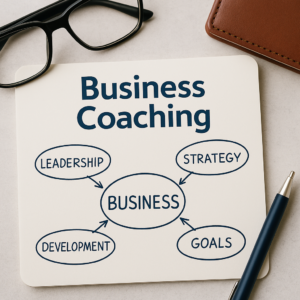 In today’s hyper-competitive marketplace, growth isn’t just about selling more products or hiring more staff. It’s about building smarter strategies, equipping leaders with sharper decision-making tools, and nurturing a culture of accountability and adaptability. This is where business coaching comes in — not as a quick fix, but as a framework to drive sustainable growth.
Whether you’re a startup founder trying to scale, a small business owner looking to systemise, or an established company adapting to disruption, business coaching provides strategies that directly contribute to measurable progress.
Why Business Growth Needs Coaching
Growth is complex. It involves multiple moving parts:
Strategy: Knowing where you’re going and how to get there.
Leadership: Inspiring and guiding teams to deliver results.
Operations: Streamlining processes to maximise efficiency.
Sales & Marketing: Consistently attracting and retaining customers.
Mindset: Resilience, adaptability, and clarity in decision-making.
While entrepreneurs and executives may be experts in their fields, many hit roadblocks. Blind spots, lack of accountability, or unclear direction can stall progress. A business coach provides the outside perspective and structured guidance necessary to overcome these hurdles.
Core Coaching Strategies for Business Growth
1. Clarifying Vision and Long-Term Goals
A coach helps leaders define their North Star — what the business is ultimately trying to achieve. Instead of vague ambitions like “increase revenue,” the goal becomes sharper: “Grow turnover by 30% over 18 months through product diversification and regional expansion.”
Why it matters: Clear goals provide focus, align teams, and prevent wasted resources.
2. Building Scalable Systems
Many businesses stagnate because they rely on the founder’s constant involvement. Coaching strategies emphasise systemisation: creating processes for sales, marketing, HR, and customer service that can run independently.
Examples:
Standardised onboarding systems.
Documented sales pipelines.
Automation of admin tasks.
Why it matters: Systems allow businesses to scale without burning out their leadership.
3. Strengthening Leadership and Accountability
Growth depends on people. Coaches often work with leaders to improve communication, delegation, and decision-making. Techniques include leadership assessments, feedback loops, and accountability frameworks.
Why it matters: A business can only grow as strong as its leadership team.
4. Financial Coaching and Profitability Focus
It’s common for businesses to chase turnover without monitoring margins. Coaches bring strategies for cost control, pricing, and cash flow management.
Why it matters: Sustainable growth means profitable growth. A £1m turnover business with a 10% margin is stronger than a £2m turnover business with a 2% margin.
5. Sales and Marketing Alignment
Coaches frequently address misalignment between sales and marketing. By creating unified customer journeys and setting shared targets, businesses avoid the trap of generating leads that never convert.
Why it matters: Growth relies on a consistent, measurable, and repeatable sales process.
6. Strategic Networking and Partnerships
Another coaching strategy involves identifying growth opportunities through alliances. Partnerships with complementary businesses, joint ventures, or referral networks can unlock new markets faster than organic sales alone.
Why it matters: Collaboration multiplies reach and resources.
7. Cultivating Growth Mindset and Resilience
Perhaps most importantly, coaches help leaders build resilience. Growth is rarely linear; setbacks are inevitable. Mindset coaching builds the capacity to adapt, pivot, and maintain confidence under pressure.
Why it matters: Resilient leaders build resilient businesses.
How Coaching Differs from Consulting
While consultants provide ready-made solutions, coaches focus on empowering leaders to generate and implement their own. For growth, this difference is crucial:
Consultant: Delivers a plan.
Coach: Equips you to build, adapt, and execute the plan independently.
The latter ensures that growth strategies are not only implemented but sustained.
Case Study Example (Illustrative)
A UK-based technology SME was struggling to grow beyond £3m in annual revenue. After engaging a coach, they:
Set measurable KPIs tied to long-term growth objectives.
Implemented a leadership accountability framework with monthly reviews.
Streamlined customer acquisition by aligning sales and marketing.
Introduced financial dashboards for real-time profit analysis.
Within 18 months, turnover grew to £4.5m with improved margins — but more importantly, the leadership team felt confident to continue scaling without dependence on external input.
Choosing the Right Coach for Growth
Not all coaches are the same. To find the right fit:
Look for relevant industry experience.
Check credentials and evidence of prior results.
Assess chemistry — growth strategies require trust and open communication.
Consider directories like local business coaches to discover vetted professionals in your area.
The Future of Coaching for Growth
Trends shaping the future include:
Hybrid delivery: Mixing face-to-face with virtual sessions for flexibility.
AI and data tools: Coaches using analytics to measure progress in real time.
Niche specialisation: More coaches focusing on micro-sectors (e.g., e-commerce growth, sustainability scaling).
SME-focused coaching: Increasing demand from small and medium-sized businesses that see coaching as an investment rather than a cost.
Conclusion
Coaching business growth strategies isn’t about quick fixes or cookie-cutter solutions. It’s about equipping leaders and businesses with the tools, mindset, and accountability to grow sustainably. From clarifying vision to implementing systems, aligning teams, and strengthening resilience, coaching has become one of the most effective investments for long-term success.
In the UK, as more entrepreneurs and companies embrace professional coaching, we can expect to see stronger businesses that not only survive market shifts but thrive because of them.